

The Role of Tire Traction to Improve Acceleration of your NSX
The Role of Tire Traction to Improve Acceleration of your NSX
October 22, 2024At ScienceofSpeed, we know that the Pure900 turbochargers produce significantly more power on both the dyno and street based on engine performance data (significant increases in airflow compared to the factory turbochargers). Air mass allows us to quantify how much air the engine is consuming, which directly translates to power. The Pure900 turbochargers flow more air and produce more power all the way down to 2,000 RPM compared to the factory turbochargers. In fact, Pure900 turbochargers using E40 fuel produce an increase of over 200 wheel horsepower and nearly 200 lb-ft of torque compared to the factory turbochargers.
A big factor in acceleration performance is tire traction. When engine performance is increased with these upgrades, marginal tire performance becomes the bottleneck.
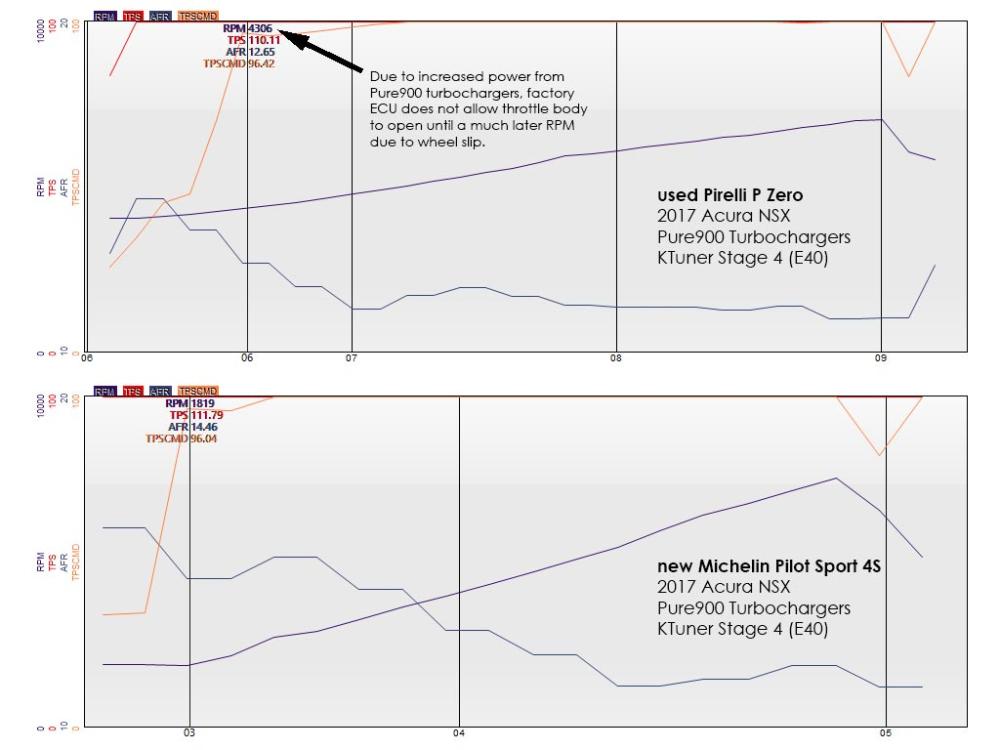
When launching from a standing start, the factory modules use inputs from sensors to minimize wheel slip and improve tire traction. If the engine produces more torque, wheel slip may increase, and the factory ECU will close the throttle to limit torque. While some slip would be beneficial to warming up the tires, we don't have control over the factory launch and traction control systems. This means that the tires mounted on the wheels need to be able to cope with the increased power if maximum acceleration will be realized.
We had a good opportunity to test this on a 2017 NSX with Pure900 turbochargers, KTuner with E40 FlexFuel, and ScienceofSpeed's exhaust system. This setup produces over 760 wheel horsepower or an increase of well over 200 wheel horsepower over the factory power output.
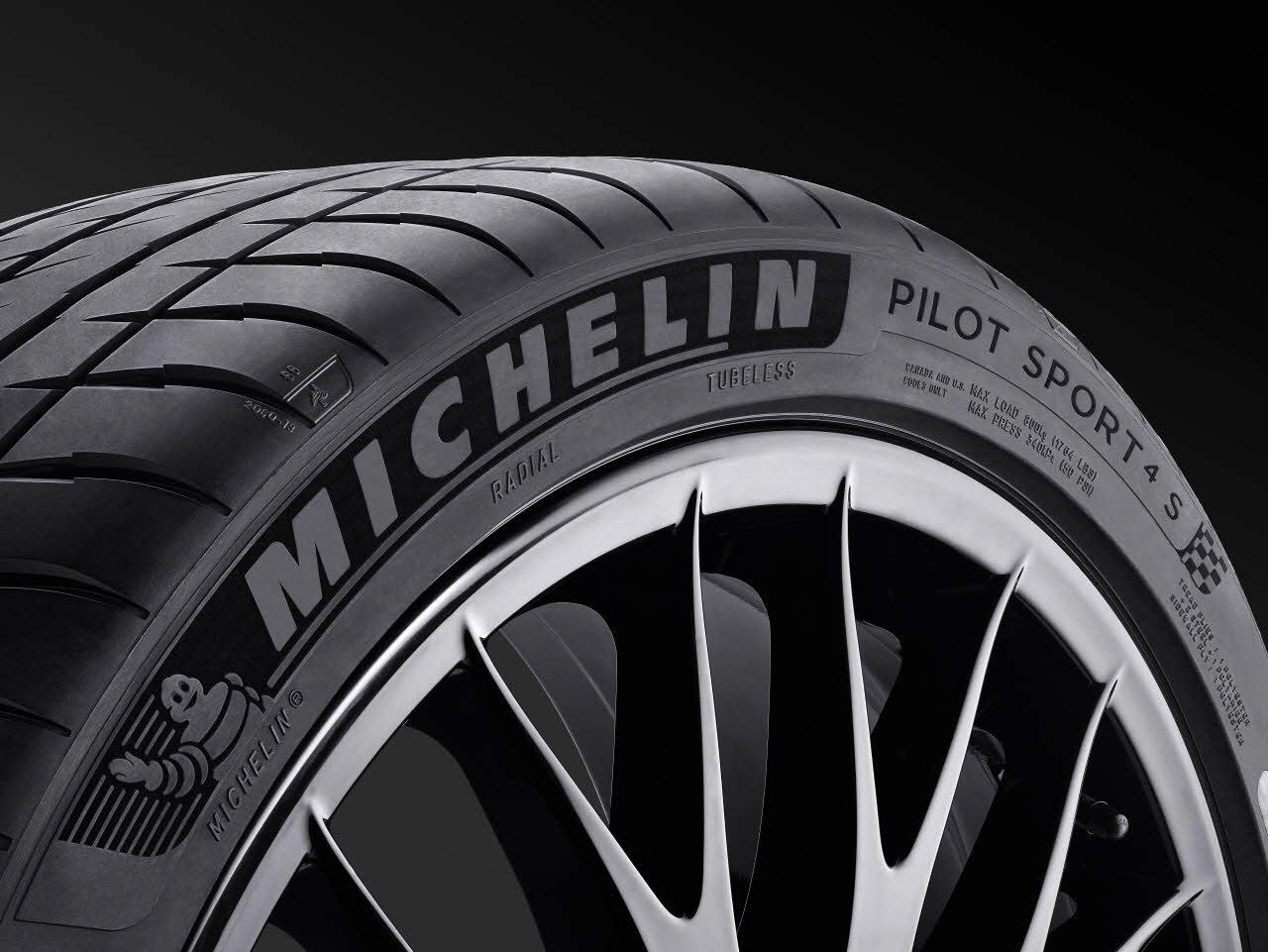
The car had wide 255/325 Pirelli P Zeros installed. The Pirelli P Zero is a performance tire with a 280 treadwear tire. These tires had more than 50% tread depth, however they were older - 6 years since the manufacturing date. This is a typical scenario we see on customer cars due to the limited number of miles driven per year. We installed new Michelin Pilot Sport 4S tires, which have a higher treadwear rating of 300 - but are a known good performer. As you can see in the log - with the car being launched in launch control mode from a stop - the factory ECU would not allow throttle opening until 4300 RPM with the Pirellis, with the throttle fully opening at 5,200 RPM. By comparison with the new Michelin tires installed and no other variables changed, the ECU now allows throttle opening at 1800 RPM, with the throttle fully opening at 2,200 RPM. Despite the Pirelli tires having a lower (sticker) treadwear - the newer Michelins out-performed the Pirelli tires from a standing start. This is not to say the Pirellis are a bad tire - but clearly, age and wear have had an effect.
When improving engine performance the consideration of tire traction is important to allow the powertrain to transmit engine torque to the road. Wider wheels that support a wider tire profile can improve traction. ScienceofSpeed now offers the S5 and P10 wheels with wider than factory widths to support wider performance tires.
Recent Posts
-
Its time for our Annual ScienceofSpeed New Years Meet!
 December 18, 2025
 -
NSX CCU (Climate Control Unit) Woes
 October 31, 2025
 -
ScienceofSpeed Rewards Program now live!
 August 13, 2025
 -
failing electrical components in first generation NSX
 December 2, 2024
 -
TVS Supercharger for NSX Achieves New Horsepower Record!
 November 27, 2024